• Birinci navigasyona geç
  • Skip to main content

SOLARIAN

Are you ready to discover?

  • About Us
  • Services
    • Due Diligence
    • Inspection & Certification
    • Project Management
    • Investment Consultancy
  • Our References
  • Articles
  • Career
  • Contact Us
  • English
    • Türkçe
    • English
    • Deutsch
    • Română
    • Español
    • Italiano
    • العربية

energy

Solarian 2018 Year-End Audit

Solarian 2018 Year Assessment

The first quarter of 2018 was very active and rapid for the solar sector. When the projects carried out in 2017 were forced to adapt to the new legislation, projects were suspended, or attempted to be completed in a hurry. The emerging result led investors to understand the importance of independent auditing firms. Although the rest of the year was painful for the sector, it was intense for us.

As Solarian throughout the year, we contributed to over 250 MW projects. Approximately 130 MW of these are audit and inspection and the rest are consultancy services. In this process, more than 100 companies entrusted their projects to us.Under the name of consultancy; We tried to provide added value to the projects of all stakeholders of the sector, including producers, financiers and investors. On the producer side, we conducted technology researches, project management on the investor side, and plant valuation and feasibility studies on the financier side.

Under the name of inspection; We checked the solar power plants in accordance with the IEC 62446 standard. In this service delivery, we carried out analysis maps beyond the auditing and reporting, and continued to analyze the plants after the actions taken and tried to deliver the plant in a manner that did not solve the problem. We believe that this is the most important feature that distinguishes us from other audit firms and we are proud of our audit team due to the positive feedback received from our investors.
As a result of the inspections, we have prevented loss of 3000 kWp installed power and 5000 MWh production. We have seen that many different causes due to various reasons, such as low performance because of improper engineering due to shadows caused by incorrect engineering, low performance because of not using suitable technologies and cell damage caused by loss of production . You can see more detailed results in our infographic.

To avoid some of the problems mentioned above are unfortunately not possible for power plants which are already commissioned. Disassembly of the construction, approximately 4,000 panels per MW, or approximately 20 inverters, the technically inadequate cables to remove and replace, such as creating a drainage system can not be performed in commissioned power plants.
The only way to avoid this is to work with an independent audit firm not only when there is a problem, but it is necessary to work with an audit firm in entire process of investment in order not to leave a measure in all processes of the investment. We, as a team, aim to pioneer long-term efforts together with investors and business partners and see our customers as a real stakeholder. For this reason, we have created our vision by aiming not only needs-based, but also progressive-based progress.

Solarian 2019 Year Goals

We are also preparing to provide our domestic consultancy and inspection services for solar energy investments abroad.

under the brand identity and independent local audit firm with the audit team by expanding the services we perform in Turkey, will perform abroad.
Since we have gained experience and clearly see that the reason for each plant’s incomplete production is different, we plan to support investors in a more affordable, faster and value-added way by creating more flexible audit scopes than the problems of the power plants.
What we come across during inspections of Solar Power Plants

One of the questions faced by EPC companies during the solar investment phase is “How much money is the total?” It is the question. When it comes to this point, the quality of the work begins to be questioned. At this stage, you will hear the investor saying that if the panels and inverters are German brand, they do not care about the rest. Does using only these product groups in German brand make the SPP investment really high quality?

I’ve tried to adress some items below that we encountered in some occasions. Wishing it to be useful.

1- Production defects of panels and compliance with warranty

I think this part is the most important part. Solar panel manufacturers offer an instruction manual on panel mounting. It’s about how to install the panel. Although the panel is the same panel, different manufacturers have different discourses. First of all, we notice that these warnings are sometimes ignored. At this stage, how much damage the wrong application may cause to the panel will vary depending on the application, but the main issue is that the panel is out of warranty.

So? If there are cell breakdowns in the panel and there is a low production, the manufacturer can take you out of warranty as you are putting the clamps on the short side. Two independent issues, but a malicious manufacturer can use it in its favor.

In addition, degredation and internal fractures in the panels. Relatively “poor quality” panels that cause energy losses occur in many places. There are many producers in Tier-1 section however production in this way is unfortunately available.

We encounter this problem many times in the power plants builted.

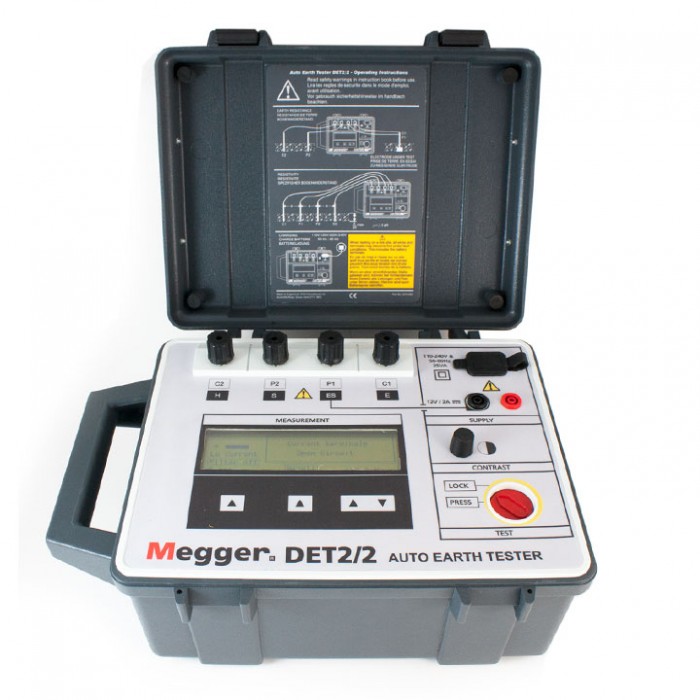
2- Grounding is important. Your SPP will not be eligible because Megger has given compliance with the equipotential-bar.

Grounding is very very important. In both the leakage current protection and the insulation measurements of the inverters and in many parts of the whole system, its important. You don’t have to master this issue, but think of it, the electric current has to go a way. You’re going to make it easier for you to get there so that you don’t go the way you don’t want it to go. If you don’t make it easy, then it starts to go in ways you don’t want it to go. It will damage your devices and power plant.

Make sure that your construction and electrical devices are well grounded. Use bimetallic material if there are transitions such as copper / aluminum in the grounding elements. Grounding is not a joke, the price is heavy.

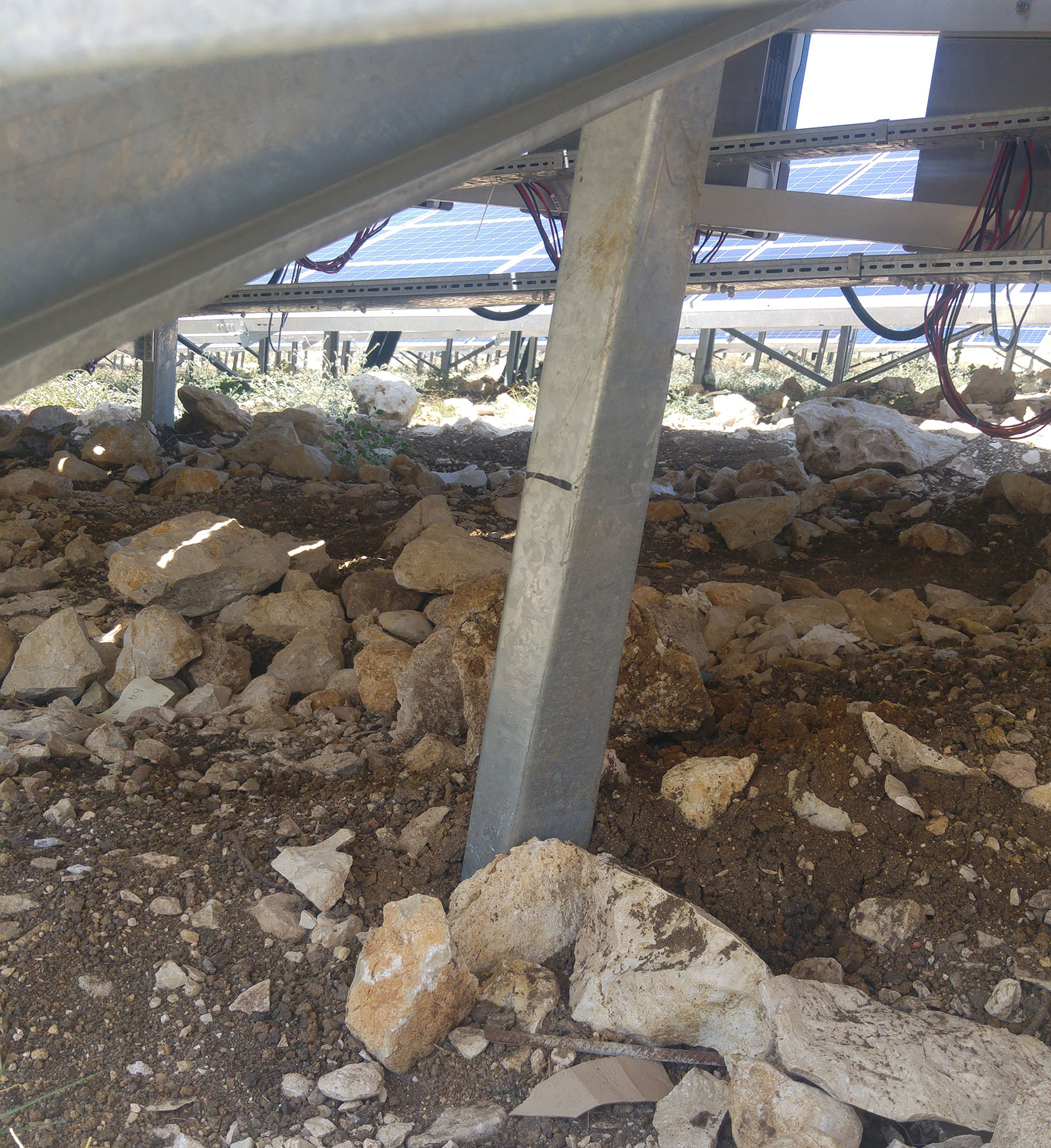
3- The construction must be nailed correctly. It should not be stretched to fix it later, it must be fixed to the clamps.

When the piles are misplaced during the nailing process, the error is either not noticed or it is hard to pull out and repeat the process. At this stage, the upper construction is stretched with the belts until it engages. At the end of this process a high force is formed in the panels. The panel surface is cracking at the slightest snow / wind load.

The clamps that are not fastened with torque cause the panels to fly in the wind. It is necessary to ensure that all clamps are secured.

4- Pay attention to the cables. It shouldn’t bend too much, be protected from the sun.

DC cables sometimes become very flexible and sometimes under the sun. These cables will be damaged in the long term. It also shows the first indication of the isolation by giving the inverter the error of isolation. If not controlled, the leakage current may go from damaging the panels to damage to other panels on the same MPPT. This error was a mistake that we encountered very often. It is an important section to be taken care of.

5- Bird droppings, damaged panels and general site cleaning

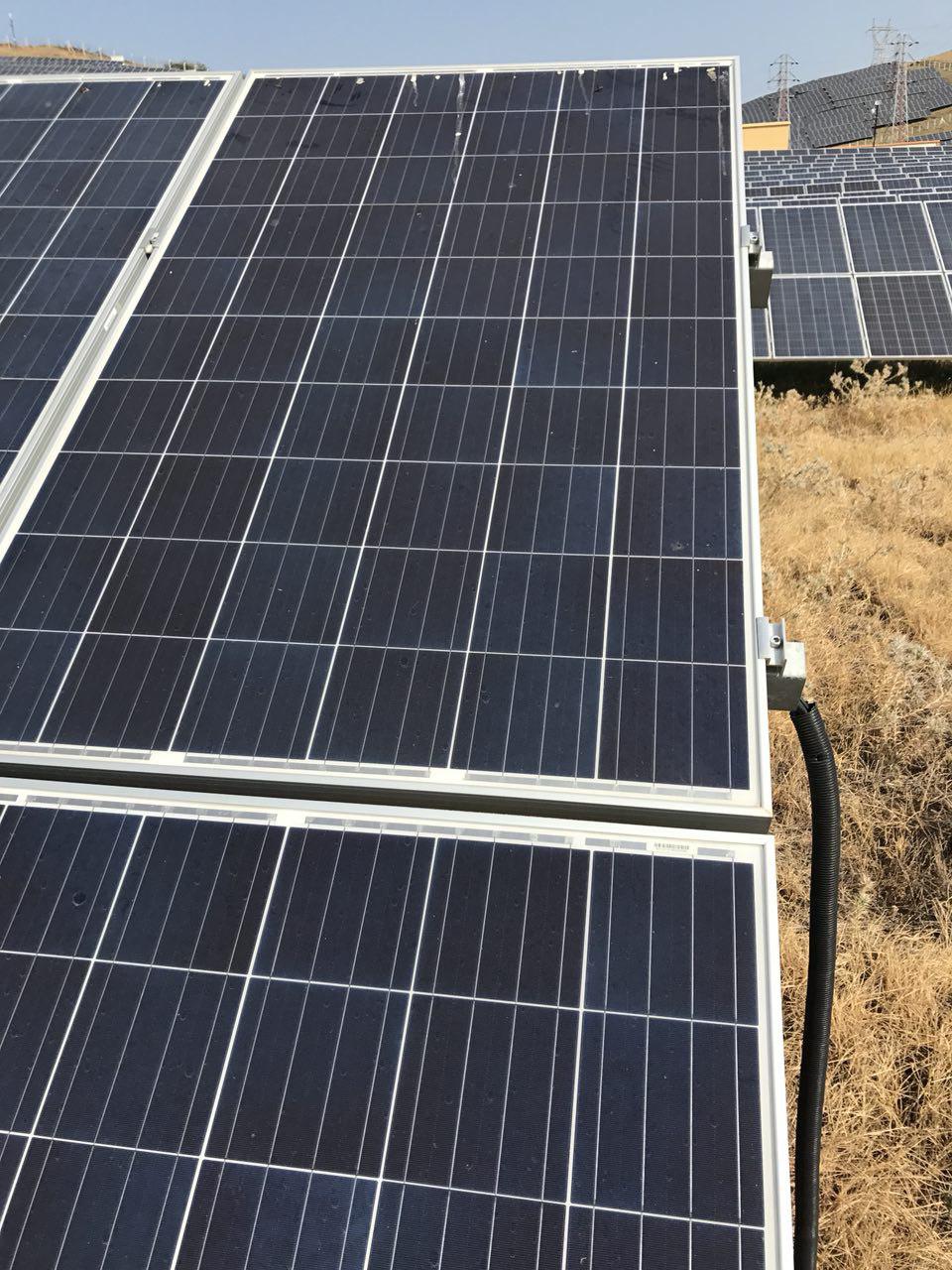
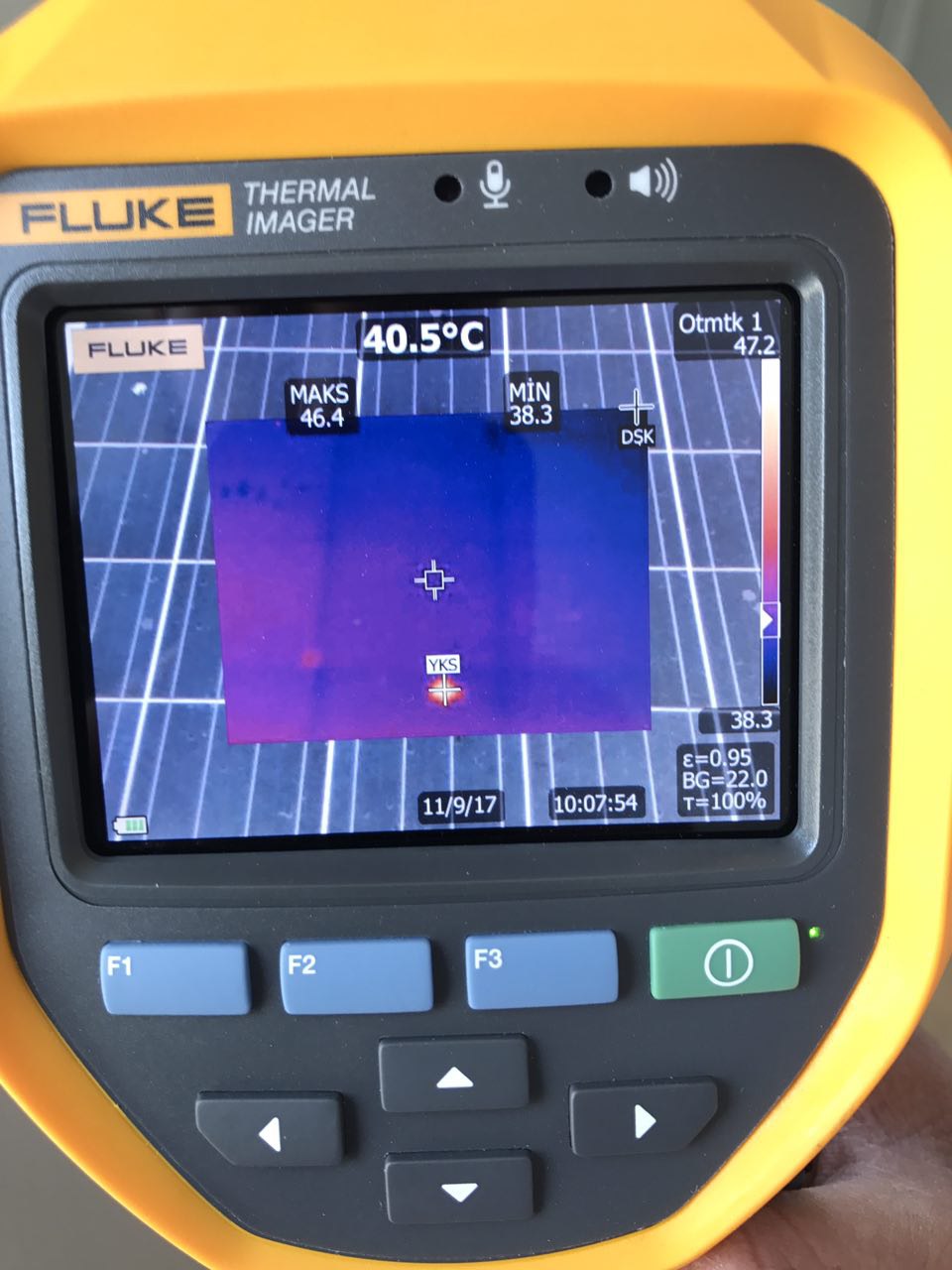
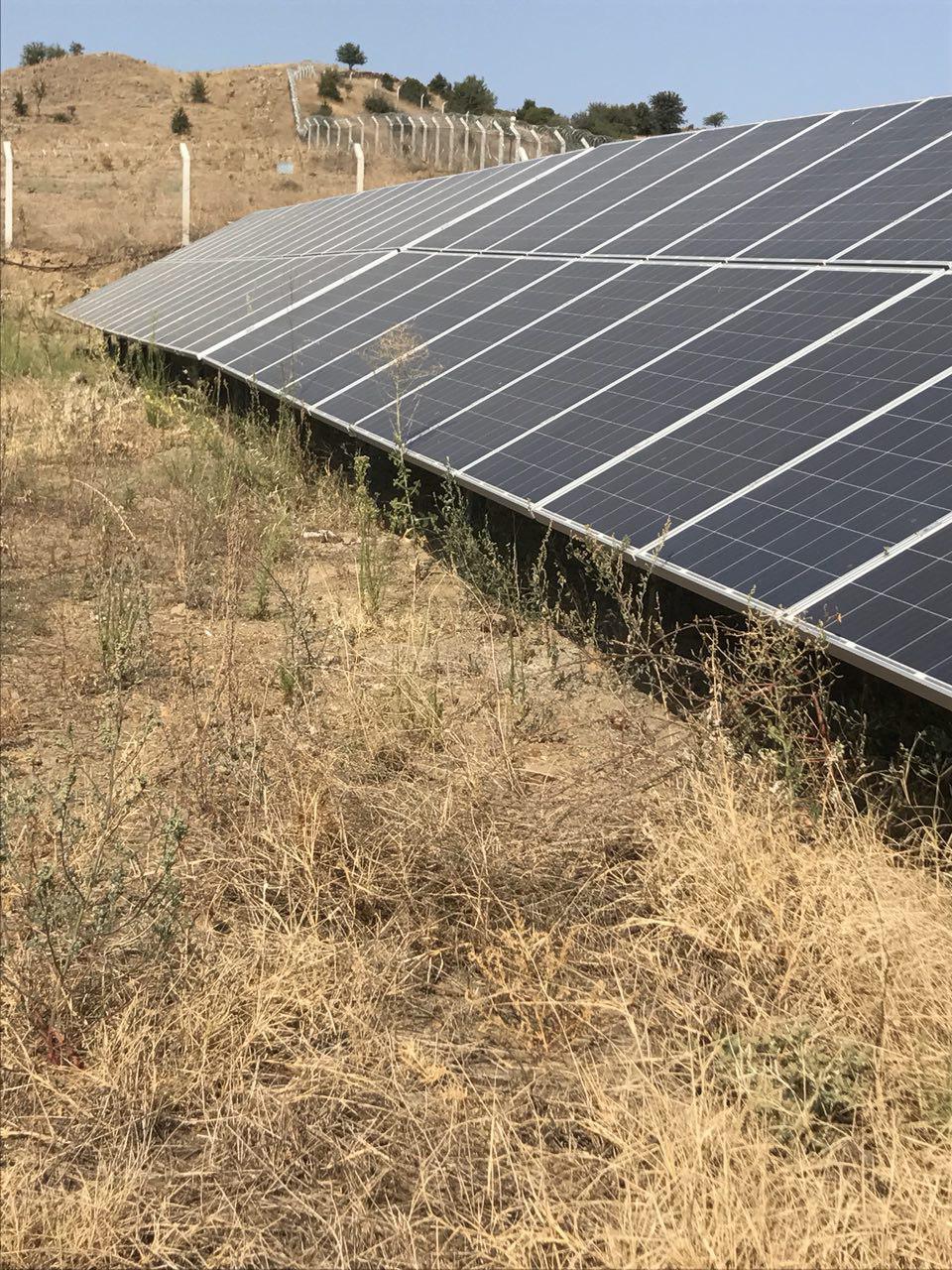
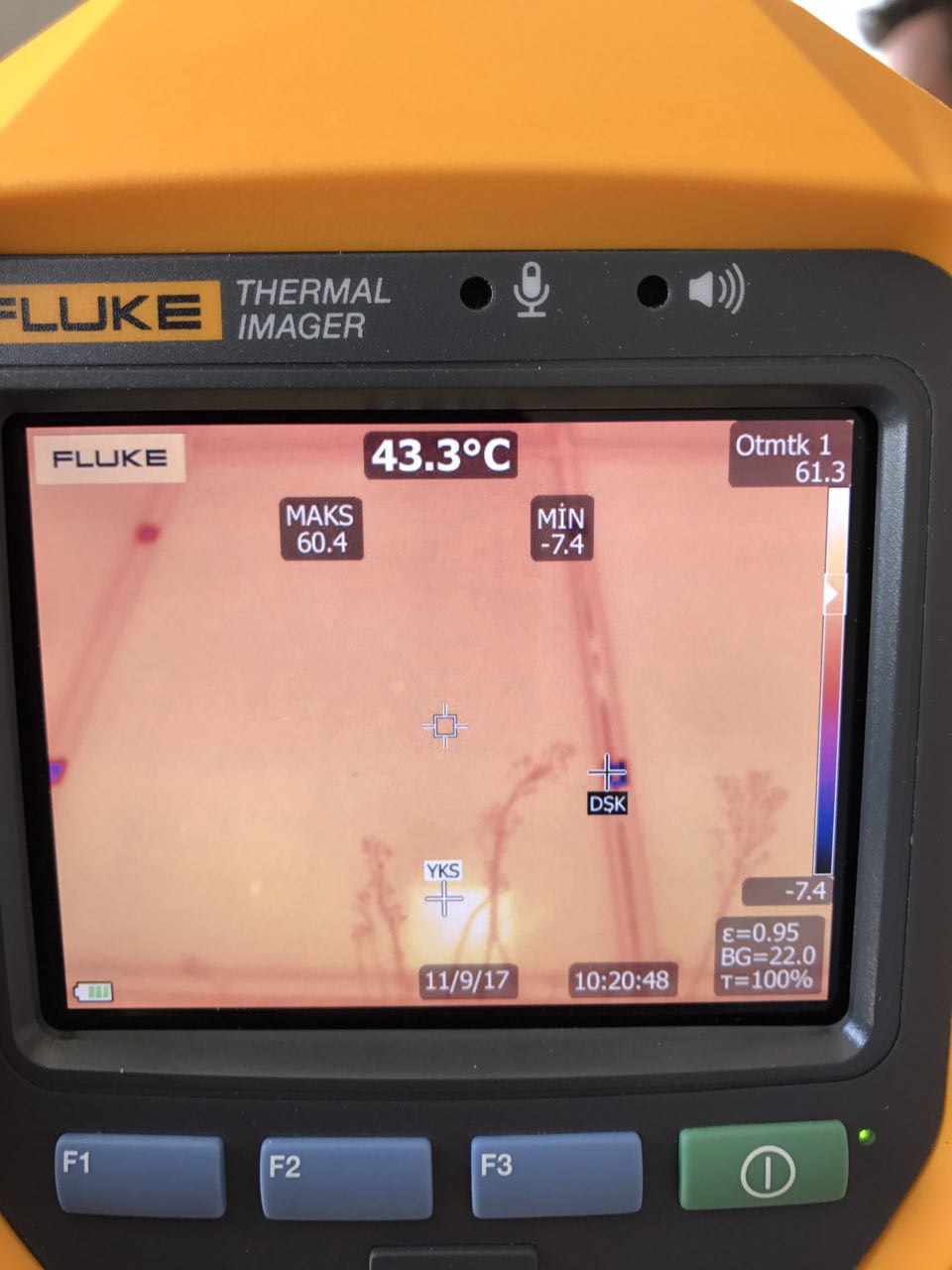
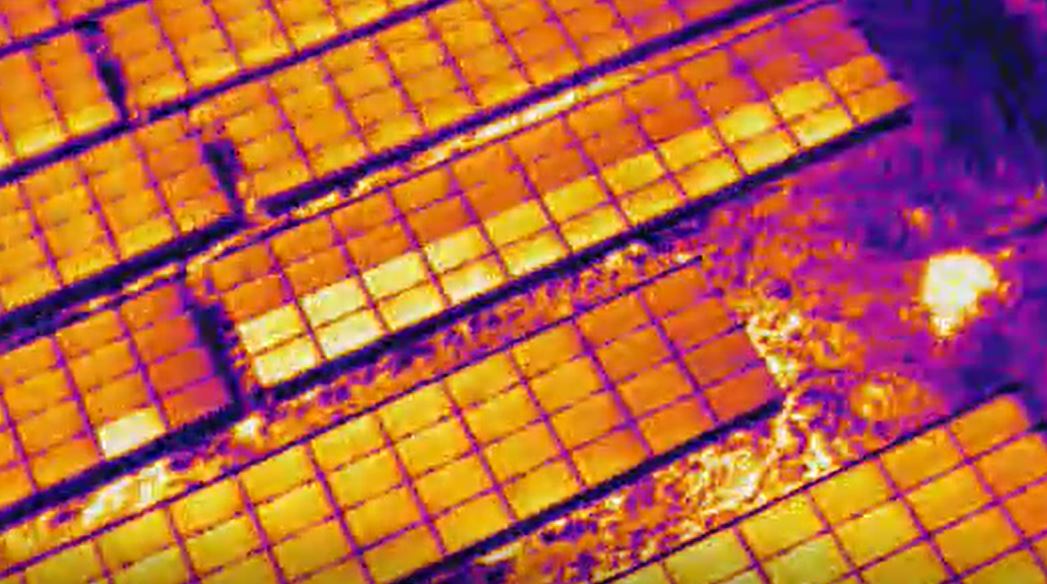
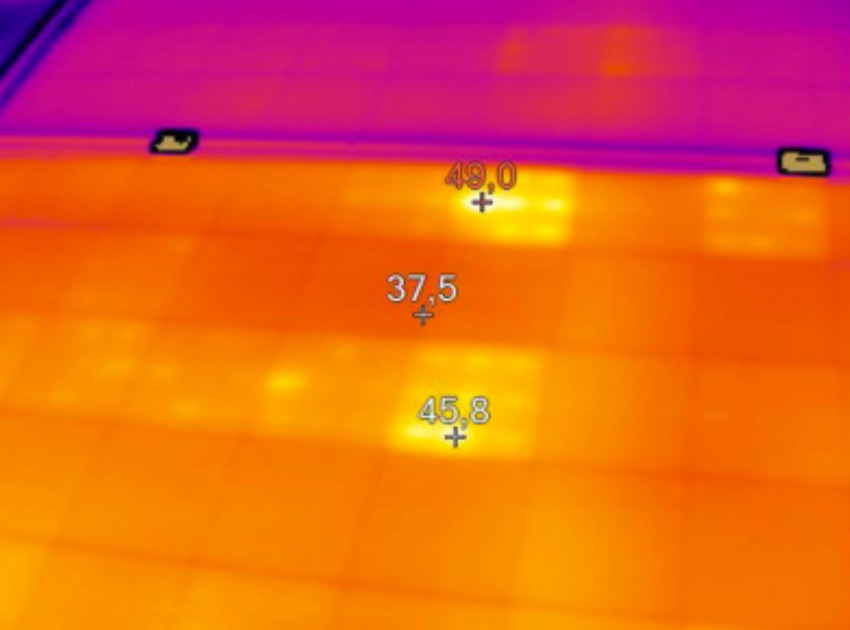
After investing a million dollars, it shouldn’t be that difficult to clean the grass. Herbs that have reached the height of the panels and bird droppings damage the panels. At the point of shading, the temperature rises and the hot-spot is formed and that part of the panel loses its functionality. Hotspot problems reach the other cells over time, making the panel unusable.
Solar panels which damaged by stones or bullets should be replaced immediately . Although the cell input output voltage is at the level of 0.6V, the potential differences with the earth are in the 300V-400V range. Water leakage, short circuit etc. When coupled with such problems can lead to very serious damages and fires. Damaged panels should be removed from the system and replaced immediately.

6- Shading problems

Shading causes very high temperature increases in shaded parts of panels. Hotspot occurs and production loss occurs.

7- Strings not connected to the inverter

This is one of the most interesting situations we’ve encountered. The investment is made but the strings are not all connected. You know, maybe some of your strings have never been activated?

8- Mounting Errors

We come across with many SPP facilities with mounting errors. How accurate is the connector placed inside the water-holding C-profiles, even though it is waterproof? In case of leakage of water into the connectors, both the plant will be deactivated and high voltage or current in the system will cause risk of death. Unfortunately, there is not much protection against the electric shocks on the DC side.

Cutting edges of the metals on the cable routes are not sufficiently rasped? AC cables that expand and contract in hot-cold transformations are cut by contacting these points. After a short period of time, the short circuit of the phase-to-earth system will disable and create the risk of death.

8- Business & amp; Maintenance is planned during the construction and purchasing phase. It is not a service that is easily retrieved later.

Whether it is a SCADA infrastructure in SPP facilities, monitoring infrastructure, cable channels and transformer layout, the design is always designed for easy control and intervention. For many investors who are not in the process at this stage, seeing a production value above the inverter is enough for satisfaction. This is a very erroneous approach. If the access roads and cable routes are not designed properly, if the transformer’s values ​​are not monitored remotely, if the voltages and reactive power are not monitored, it is not easy to avoid problems. There are extra costs in every process to be done in the future.

SOLARIAN